Agentic Process Management
1. Content
1.1. Introduction
Agentic Process Management (APM) represents the evolution from traditional process automation to AI-driven orchestration of autonomous agents. This section explores how APM systems manage complex workflows, handle state, and coordinate multiple agents.
1.2. Main Content
1.2.1. Core APM Components
1.2.1.1. Process Orchestration
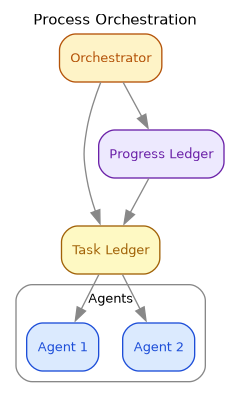
- Task Management
- Decomposition strategies
- Priority handling
- Resource allocation
- Progress tracking
- Implementation Example
class ProcessOrchestrator:
    def __init__(self):
        self.task_ledger = TaskLedger()
        self.progress_ledger = ProgressLedger()
        self.agents = AgentPool()

    def orchestrate(self, process):
        tasks = self.decompose_process(process)
        for task in tasks:
            agent = self.agents.select_for_task(task)
            self.task_ledger.assign(task, agent)
            self.monitor_execution(agent, task)
1.2.1.2. State Management
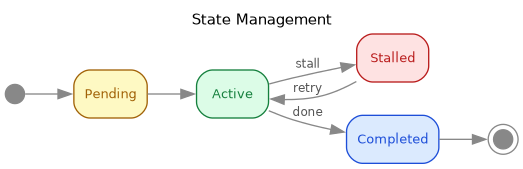
- Key Components
- State transitions
- Context preservation
- Failure recovery
- Progress tracking
- Implementation Example
class StateManager:
    def transition(self, process_id, from_state, to_state):
        with self.state_lock(process_id):
            current = self.get_state(process_id)
            if self.can_transition(current, to_state):
                self.update_state(process_id, to_state)
                self.notify_observers(process_id, current, to_state)
1.2.1.3. Agent Communication
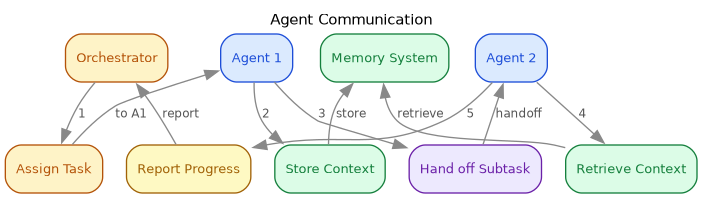
- Protocol Design
- Message formats
- Context sharing
- Error handling
- Progress reporting
- Implementation Example
class AgentCommunication:
    async def handle_message(self, message):
        match message.type:
            case "TASK_ASSIGNMENT":
                return await self.process_task(message)
            case "HANDOFF":
                return await self.handle_handoff(message)
            case "PROGRESS_UPDATE":
                return await self.update_progress(message)
            case "ERROR":
                return await self.handle_error(message)
1.2.2. Integration Patterns
1.2.2.1. Process Definition
process:
  name: "Document Analysis"
  steps:
    - type: "extraction"
      agent: "document_processor"
      requirements:
        - "text_extraction"
        - "metadata_analysis"
    - type: "analysis"
      agent: "content_analyzer"
      dependencies:
        - "extraction"
    - type: "summary"
      agent: "summarizer"
      dependencies:
        - "analysis"
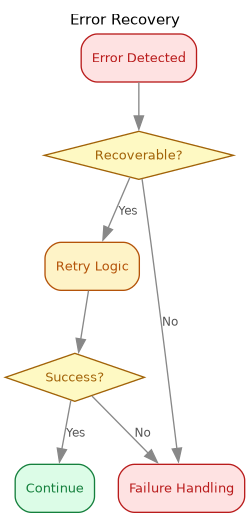
1.2.2.2. Error Recovery
1.2.3. Practical Tooling: beads
1.2.3.1. Distributed Issue Tracking with beads
beads (bd) provides git-backed distributed issue tracking suited for
agentic workflows. Each "bead" is a self-contained task that travels with
the repository.
- Integration with Agent Systems
# Create a task for an agent session bd new "Implement user authentication" "Add OAuth2 flow with JWT tokens" # Agents can comment on progress bd comment www.wal.sh-abc "Completed OAuth2 configuration" # Close when done bd close www.wal.sh-abc "Implementation complete, tests passing" - Key Properties for APM
Property Benefit Git-backed State travels with code, no external deps Distributed Works offline, syncs on push Context-aware Task history preserved in commit graph Agent-friendly Simple CLI for automated task management - Multi-Session Coordination
# Agent session can track its own bead class AgentSession: def __init__(self, task_description): self.bead_id = self.create_bead(task_description) def create_bead(self, description): result = subprocess.run( ['bd', 'new', description], capture_output=True, text=True ) return self.extract_bead_id(result.stdout) def log_progress(self, message): subprocess.run(['bd', 'comment', self.bead_id, message]) def complete(self): subprocess.run(['bd', 'close', self.bead_id]) - Workflow Example

1.2.4. APM Optimization
1.2.4.1. Performance Considerations
- Resource utilization
- State management efficiency
- Communication overhead
- Memory management
1.2.4.2. Scaling Strategies
- Horizontal scaling of agents
- Vertical scaling of processes
- Memory distribution
- Load balancing
1.3. Summary
Key APM concepts:
- Process orchestration and decomposition
- State and context management
- Agent communication protocols
- Error handling and recovery
- Performance optimization
1.4. Section References
- Forrester Research (2024). "The Rise of APM"
- Microsoft Research. "Magentic-One: Process Management"
- Key Implementations:
- Process Managers
- LangChain Flow
- AutoGen Framework
- State Management
- Vector Databases
- Memory Systems
- Communication Protocols
- Agent Messaging Systems
- Context Sharing Frameworks
- Process Managers